

A blog about Life | Relationships | Finances & more

Réka Koszta

  • How to become your own change manager


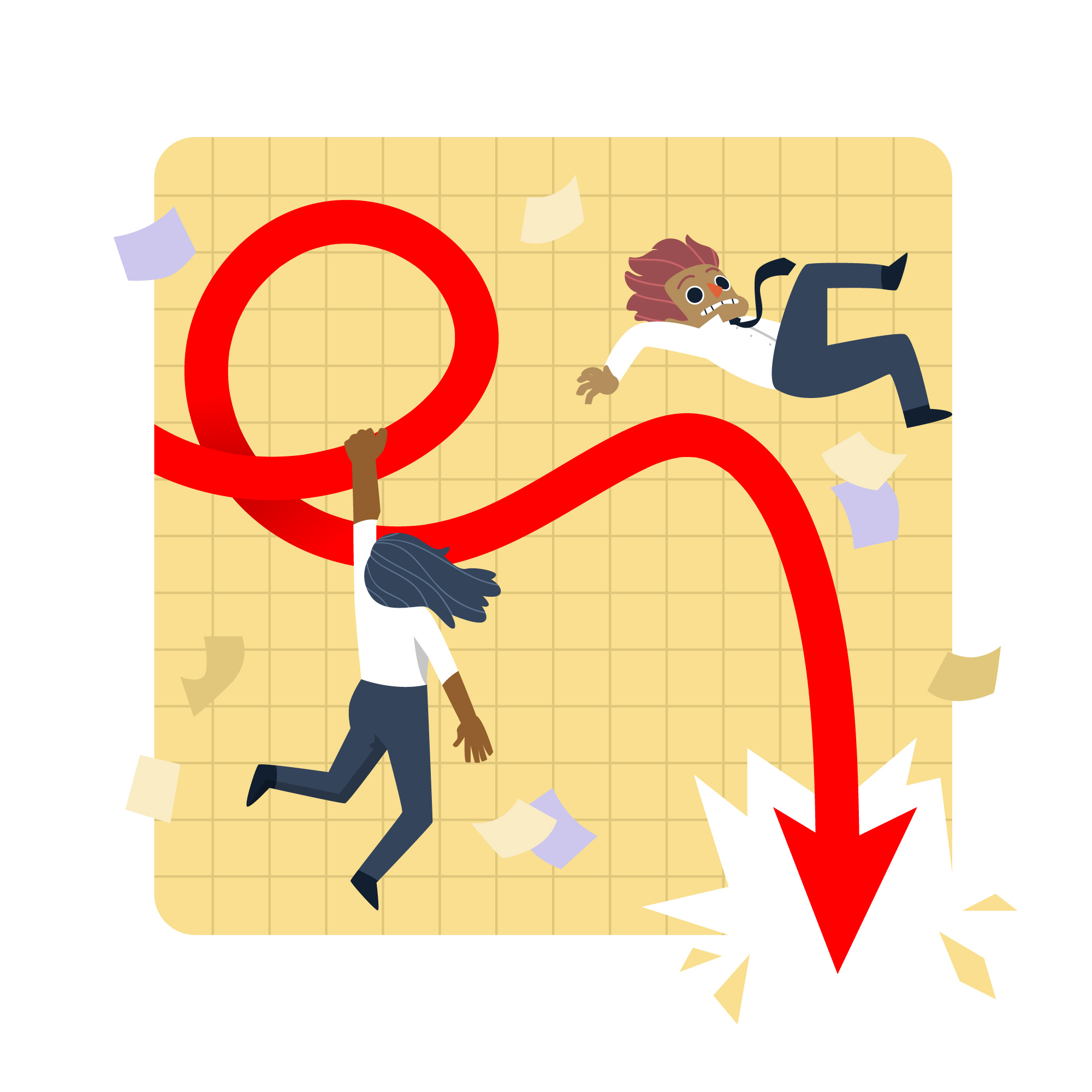
    Many of us know how well-paid change managers are in the corporate world. They guide organizations through major transitions, stay until the change is implemented, and then move on.

    But what if you could take on that role in your own life?

    This article is an invitation to start looking at change a little differently—and maybe a bit more consciously.

    I’ve written about change before, and one thing I keep coming back to is this: even when a change leads to something better, it rarely feels that way at the beginning. More often than not, we find reasons not to take the step.

    The psychology of change

    One key idea is that we, as humans, are highly sensitive to danger. When we face uncertainty, we instinctively run our own internal risk assessment.

    Here’s the interesting part:

    • When we focus on a positive outcome, we tend to undervalue the potential reward.
    • When we imagine a negative outcome, we tend to overestimate the risk.

    So in our minds, the equation often looks like this:

    • Half the reward
    • Double the risk

    Who would willingly choose change with odds like that?

    This way of thinking helped us survive in the past, but today it often works against us. It makes us resist change—even when that change could improve our lives.

    It also doesn’t matter whether the change is objectively positive or negative. The uncertainty alone increases our stress levels, and naturally, we avoid anything that brings more stress into our lives.

    Change is almost always double-sided—it carries both the possibility of gain and loss. And very often, what we get from it depends on how we approach it.

    What do we lose when fear controls us?

    Many people invest a huge amount of time and energy into maintaining the status quo. But the truth is, our environment is constantly changing. Sooner or later, we will be forced to adapt anyway.

    Wouldn’t it be better to take control earlier and shape that change for ourselves?

    Staying the same requires energy—sometimes more than changing. It also takes our focus away from the present moment. We might feel that our current situation isn’t right for us, but instead of addressing it, we compensate in other areas of our lives.

    Often, we only change when staying the same becomes more painful than changing.

    In these situations, change is driven by pressure (a push), rather than desire (a pull).

    And more often than not, the trigger for change comes from outside us.

    My own experience with change

    A senior manager began to question my work. Within a short time, I went from feeling confident in my role to doubting myself. I started overthinking, making mistakes, and questioning my abilities. At that point, I didn’t see an opportunity—I saw a problem.

    In a way, he became the driving force behind my decision to change my life.

    At first, I could only see the negatives. I felt like leaving my corporate career would mean failure. It took a lot of work on my self-confidence to start seeing the situation more objectively—and eventually, to make the change.

    Even then, I stayed longer than I should have, using the familiar excuse: “But the money is so good.”

    What I understand now is that external pressure often activates something that is already inside us. This didn’t create the desire for change—it revealed it.

    In my case, I had known for a long time that I didn’t want to commit to a 40-hour office job. I wanted more freedom—I hadn’t been ready to act on it.

    Become your own change manager

    To manage change effectively in our own lives, we need three key elements:

    • Self-confidence
    • A sense of control
    • A positive attitude

    Not perfection. Not certainty. Just these foundations.

    1. Self-confidence

    A big reason we avoid change is not the change itself—it’s the doubt about whether we can handle it.

    Since change naturally brings stress, one of the most practical ways to build self-confidence is to improve how we manage stress. The better we handle stress, the more capable we feel to navigate through change.

    2. A sense of control

    There are situations where our environment doesn’t support the change we want.

    We might tell ourselves: “Whatever happens, happens.”

    But this mindset creates the feeling that we are not in control of our lives.

    When we lose that sense of control, our inner motivation weakens. We stop seeing our role in shaping the outcome and start feeling like life is just happening to us.

    The good news is that we can reverse this. By taking small, intentional actions, we begin to rebuild our sense of control—and with it, our ability to navigate change.

    3. A positive attitude

    The way we view our performance during change matters.

    Do we focus on progress and small wins?
    Or do we just try to get through it with minimal effort, hoping to avoid negative outcomes?

    The second approach often feels easier—especially when change is forced on us. But in reality, it makes everything harder.

    When we lack motivation, even small challenges feel overwhelming.

    On the other hand, when we are internally engaged, we start to notice opportunities. We become more resilient and much more aligned with success.

    A final thought

    Change is not something we can fully control or avoid.

    But we can influence how we respond to it.

    And that alone can make a significant difference in the outcome.

    Learning to approach change with a bit more awareness, a bit more trust in ourselves, and a bit more intention is, in many ways, what it means to become your own change manager.

    And like any skill, it can be developed over time.
  • How a pleasant evening turned into an unpleasant one


    What NLP taught me about deductive thinking

    A real-life story showing how deductive thinking and emotional assumptions can derail communication — and how NLP helps break destructive thought patterns.

    How can a perfectly nice evening suddenly turn into a disastrous one?

    A few weeks ago, Andrew and I were sitting together, planning our skiing holiday. It was already November, which felt a little late to plan for February. Still, we were excited. I suggested something different this year — skiing in Japan or South Korea instead of our usual trips to Europe. The idea felt fresh, adventurous, and inspiring. We started exploring ski resorts and travel options, and for a while, the mood was great.

    Then I noticed something shift.

    Andrew became disengaged and visibly annoyed. I asked him what was wrong and gently invited him to share what was on his mind. Instead of answering, he excused himself to the bathroom. That didn’t sit well with me. I pointed out that I could sense he didn’t want to talk. Eventually, he said he’d explain tomorrow.

    There was still an entire evening ahead of us — but the atmosphere froze. I moved to the kitchen and kept myself busy. He stayed on the couch, focused on his laptop. Eventually, I said I was going to bed.

    What started as a pleasant evening of holiday planning quietly turned into emotional distance and tension.

    What went wrong?

    Was it a lack of communication? A lack of understanding?

    From my perspective, nothing had been said — so what exactly was I supposed to understand?

    Looking back, this moment is a textbook example of what NLP calls deductive thinking.

    Almost immediately, my mind jumped to conclusions. I assumed the issue was about me — a classic case of mind reading, where we believe we know what another person is thinking, usually in relation to ourselves. My thoughts spiraled quickly. Did I upset him? Did he not want to go on holiday with me? Did he just not want to say it out loud?

    This soon turned into catastrophizing — believing that the worst-case scenario is inevitable. By the time I went to sleep, I exhausted myself emotionally with problems that didn’t yet exist.

    Andrew, meanwhile, was caught in his own mental spiral.

    When the past feels like the present

    The next morning, Andrew finally explained what had happened.

    When he opened his laptop the previous evening to check flight options, he noticed an email from his company. Just seeing the sender’s address triggered memories from the past — difficult, stressful experiences that had nothing to do with the present moment. In NLP terms, an event triggered stored memories, making the past feel like it was happening now.

    He hadn’t even opened the email — yet he was already catastrophizing. He told me he felt not good enough, untrusted, and feared being called into management meetings like before. He was in prediction mode, convinced he knew what would happen next.

    Once I stepped out of my own deductive thinking spiral, clarity returned. I reassured him: even if things changed at work, we would be fine. Life would go on.

    Finally, we opened the email together.

    Ironically, neither of us fully understood it — but it was certainly not what Andrew had imagined. Suddenly, all the imagined disasters dissolved. He wasn’t failing. He wasn’t losing his job. And yes — we could still go on vacation.

    A happy ending — but an unnecessary emotional rollercoaster.

    How often do we do this to ourselves?

    How many times do we slip into deductive thinking without realizing it?

    How often do we emotionally punish ourselves for scenarios that exist only in our minds?

    The way out is simple — though not always easy: shift from emotion-driven assumptions to fact-based thinking.

    In my case, the facts were clear: I hadn’t said anything wrong. So there was no reason to assume blame.
    In Andrew’s case, the solution was to face the facts — even if they turned out to be uncomfortable. Facts are far easier to deal with than assumptions, which are often subjective, distorted, and false.

    What NLP teaches us about thinking patterns

    NLP offers practical techniques to pause, step out of emotional spirals, and engage inductive thinking — the ability to process information based on evidence rather than assumption.

    The foundations of this model were laid by Virginia Satir, who identified that our thinking styles are learned habits. The way we interpret events is not fixed — it can be unlearned and reshaped.

    We don’t control which thoughts pop into our minds.
    But we do control which thoughts we focus on — and how we process them.

    Growth begins with awareness.

    When we understand how we internalize experiences and respond to them, we gain the power to interrupt destructive patterns and choose healthier ones.

    And sometimes, that awareness is all it takes to turn a “disastrous evening” back into a meaningful connection.

    If you recognize yourself in this story — the spiraling thoughts, the assumptions, the emotional reactions that feel real but aren’t grounded in facts — know that you’re not alone. Most of us were never taught how to observe our thinking patterns, let alone how to change them.

    Coaching offers a space to slow down, step out of automatic reactions, and develop awareness around how you process situations, relationships, and challenges. With the right tools, it becomes possible to respond with clarity rather than emotion, and to make decisions from a place of intention instead of assumption.

    If you’re curious to explore this for yourself, I invite you to reach out for a conversation. Not to fix anything — but to gain perspective, clarity, and choice.

    Sometimes, all it takes is seeing the puzzle from a different angle.

  • Hera: Queen, wife, and archetype of the sacred marriage


    Mythological background

    In Greek mythology, after Zeus and his siblings secured Olympus as the new generation of gods, dominion over realms was distributed among the brothers — but not the sisters. Hera did not receive territory to rule. Instead, she became the wife of Zeus and, through marriage, the Queen of the Gods.

    She presided over sacred marriage, covenant, and legitimacy. Yet most myths portray her through the lens of jealousy and vengeance, relentlessly pursuing Zeus’s lovers and punishing their offspring. Beneath this narrative lies a deeper wound: Hera was repeatedly humiliated by Zeus’s affairs. He dishonored what was sacred to her — marriage itself — and openly favored children born outside their union.

    Her name is thought to mean “Great Lady,” the feminine form of the word hero. In Roman mythology, she is known as Juno.

    Interestingly, among the classical planets, only Venus carries the name of a goddess. The visible heavens were largely dominated by masculine planetary symbolism. With the discovery of the asteroid belt in the 19th century, feminine archetypes gradually entered astrological interpretation, adding nuance and depth to natal chart analysis.

    Asteroid Juno (4) was discovered in 1804.
    Asteroid Hera (103) followed in 1868.

    As with other archetypal pairs, the Roman expression (Juno) often represents the more integrated or socially accepted qualities of the archetype, while the Greek expression (Hera) reflects its shadow manifestations.

    Asteroid Juno in astrology

    Juno represents committed partnership — the visible, socially recognized union. It describes the type of partner we choose for everyday life and the meaning we assign to marriage.

    For Juno, identity is deeply intertwined with partnership. Through the relationship, she finds wholeness.

    • Its sign placement shows how easily (or with what difficulty) we form long-term bonds and compromises.
    • Its house placement reveals the life area where partnership plays a defining role.
    • In a man’s chart, Juno can describe the type of wife he seeks.
    • In a woman’s chart, it may reflect the “First Lady” archetype — the partner who stands beside her husband, elevating status and embodying legitimacy.

    When prominent, Juno indicates a profound need for sacred, recognized union. Partnership alone is not enough; formal commitment carries psychological importance.

    Asteroid Hera – the shadow of marriage

    Where Juno symbolizes commitment, Hera represents what happens when devotion becomes dependency.

    If Hera is strongly emphasized in a natal chart, themes of jealousy, possessiveness, and emotional vigilance may emerge. The individual may constantly seek confirmation of loyalty, becoming hyper-attuned to betrayal. Anger is often displaced outward — toward rivals rather than toward the partner upon whom emotional security depends.

    Hera reflects the loss of independence within marriage — power surrendered in exchange for status.

    Psychological expressions of the Hera archetype

    The Wife

    At her core, Hera represents the longing to be a wife.

    A woman strongly identified with Hera may feel fundamentally incomplete without partnership. Marriage brings prestige, social recognition, and a sense of belonging. She does not aspire merely to cohabitation — she wants legitimacy and acknowledgment.

    To be “Mrs. Somebody” carries psychological weight.

    Capacity to bond

    Hera grants extraordinary loyalty. When she commits, she commits fully — “for better or worse.” Her dedication is not conditional. She can endure hardship, remain steadfast, and protect the institution of marriage with unwavering devotion.

    This archetype strives for wholeness through sacred union.

    The jealous archetype

    When wounded, Hera displaces pain outward. Instead of confronting the partner she depends on, she may blame “the other.” Rage becomes her response to loss. Activity replaces vulnerability.

    Hera across life stages

    Childhood

    Even in early childhood, Hera energy may appear in symbolic play. The young Hera plays house, assigns roles, reenacts domestic structure. Partnership and relational identity are already central themes.

    Adolescence and young adulthood

    The adolescent Hera seeks security through steady relationship. She dreams of marriage and imagines her future name as Mrs. Someone.

    Status can matter deeply — particularly in socially conscious environments. College may be viewed not primarily as intellectual expansion, but as the ideal place to find a husband. If partnership does not materialize, anxiety increases.

    Adulthood and professional life

    For Hera-dominant women, career is secondary to marriage. Work may be performed competently, even successfully, but it does not define identity. Marriage does.

    In a dual-career household, her professional path may quietly adapt to support her husband’s ascent. Corporate environments can suit Hera well — she understands hierarchy, loyalty, and institutional structure.

    Friendships with other women are often less prioritized than the marital bond.

    Sexuality is linked to marriage; the wedding day holds profound symbolic significance. It marks not only a ceremony, but an identity transformation.

    Motherhood

    Children are often embraced as part of the role of wife. However, unless Demeter, Artemis, or Athena are also strong in the psyche, maternal bonding may feel secondary to the marital relationship.

    If forced to choose between husband and children, Hera may prioritize preserving the marriage.

    Midlife

    Hera’s happiness is deeply tied to the stability and success of her marriage. Stable unions to devoted, appreciative partners allow her to flourish.

    Divorce, widowhood, or betrayal can destabilize her core identity.

    When midlife stress threatens the marriage, possessiveness and jealousy may intensify — sometimes accelerating the very rupture she fears.

    The integrated Hera

    In her highest expression, Hera represents:

    • Sacred commitment
    • Loyalty and endurance
    • Institutional legitimacy
    • The power of partnership
    • The ability to build legacy through union

    In her shadow, she embodies:

    • Jealousy
    • Emotional dependency
    • Loss of autonomy
    • Rage displaced onto rivals
    • Identity fused entirely with marriage

    Hera teaches that sacred union requires not only devotion — but sovereignty.

    Without inner wholeness, even the Queen of the Gods becomes vulnerable to humiliation.

    Explore other archetypes in the series:

  • The most common communication mistake in everyday conversations at home


    Reflecting on a common communication mistake and why listening deeply at home matters as much as at work.

    The wake-up moment: a lesson from “Supercommunicators

    I spend my days helping people feel heard, understood, and supported—yet I recently realized I often fail at this in my own everyday conversations. As a life coach, I pride myself on listening deeply, but a moment of uncomfortable self-recognition while reading Supercommunicators by Charles Duhigg forced me to pause and reflect. What if the communication skills I practice professionally aren’t fully showing up where they matter most—at home, with the people I love?

    “…I’ve tried to have learning conversations in every part of my life, and it has helped me listen more than I used to. (I’m getting better, though my wife, just last week, asked how a rambling dinnertime monologue might align with some of the advice in this book.)”

    Supercommunicators by Charles Duhigg

    I had an aha moment and knew—oops, this is me. At home, I often launch into long monologues with Andrew, confidently sharing my thoughts on different topics, rarely pausing to ask his opinion. Somewhere along the way, I convinced myself that my perspective was so insightful it deserved the spotlight. What I realized, however, is that effective communication is not about being interesting—it’s about being interested.

    Letting go of the need to be right

    One of my biggest takeaways from this book is that listening should not be reserved only for my professional role as a life coach. At work, I carefully listen to emotions, ideas, and unspoken needs, helping others find clarity and strength within themselves. At home, with the people I love the most, I need to offer that same presence, curiosity, and humility.

    Yes, I may be good at certain things—but not everything. Strong communication in relationships requires space, not dominance. It requires pausing, asking questions, and allowing other voices to matter just as much as my own.

    Charles Duhigg’s journey and his desire to understand what makes some people so good at connecting through communication is brilliant. Supercommunicators is filled with powerful insights about human connection, emotional intelligence, and the psychology of meaningful conversations. Reading it humbled me. It reminded me that self-awareness is a lifelong practice. I am not as skilled as I sometimes believe—but I am willing to learn. And that willingness is where growth begins.

    Years ago, I learned that perfection is not the goal. Progress is. Becoming just a little bit better in the areas that truly matter—like connection, empathy, and relationships—is enough. Communication shapes our relationships, and relationships shape our lives. That makes paying attention to how we listen not optional, but essential.

    Why connection matters more than success

    In my previous career in finance, Continuous Professional Development was mandatory. Every year, we signed up for courses to maintain high professional standards. I now believe we should apply the same mindset to our personal lives. We should actively learn how to communicate better with our families, how to show up emotionally, and how to support others in ways that serve them, not our own egos.

    How many of us overlook these skills because career growth feels more urgent? I know I still do sometimes. Acknowledging it is uncomfortable—but necessary. Writing this down is my way of holding myself accountable, creating something I can return to when I lose focus.

    Because success without connection leads to isolation. When there is no one to share your achievements with, even the biggest wins feel empty. Real fulfillment comes from relationships built on understanding, listening, and mutual respect.

    So I am choosing connection first—trusting that everything else will follow.

©2025. All rights reserved.

Verified by MonsterInsights