
A blog about Life | Relationships | Finances & more

Astrology

🌙 My passion. Astrology often belittled as quackery, was a science until recently. Largely based on mathematics it is disarmingly revealing when done accurately (…go peak I know you’re curious). You wouldn’t believe how many leaders still won’t make a pivotal decision without first consulting the stars. Btw: Astrology applies to countries as well.

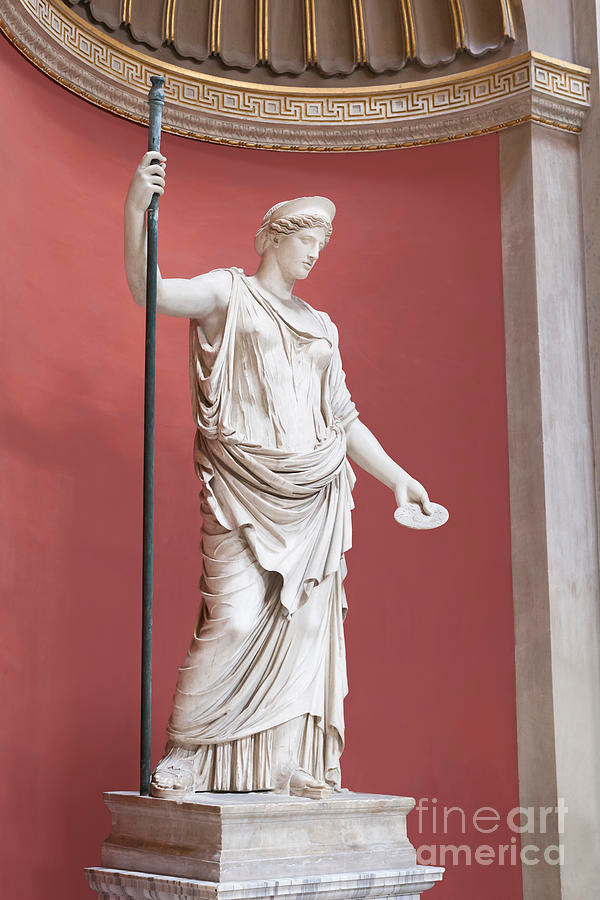
  • Hera: Queen, wife, and archetype of the sacred marriage


    Mythological background

    In Greek mythology, after Zeus and his siblings secured Olympus as the new generation of gods, dominion over realms was distributed among the brothers — but not the sisters. Hera did not receive territory to rule. Instead, she became the wife of Zeus and, through marriage, the Queen of the Gods.

    She presided over sacred marriage, covenant, and legitimacy. Yet most myths portray her through the lens of jealousy and vengeance, relentlessly pursuing Zeus’s lovers and punishing their offspring. Beneath this narrative lies a deeper wound: Hera was repeatedly humiliated by Zeus’s affairs. He dishonored what was sacred to her — marriage itself — and openly favored children born outside their union.

    Her name is thought to mean “Great Lady,” the feminine form of the word hero. In Roman mythology, she is known as Juno.

    Interestingly, among the classical planets, only Venus carries the name of a goddess. The visible heavens were largely dominated by masculine planetary symbolism. With the discovery of the asteroid belt in the 19th century, feminine archetypes gradually entered astrological interpretation, adding nuance and depth to natal chart analysis.

    Asteroid Juno (4) was discovered in 1804.
    Asteroid Hera (103) followed in 1868.

    As with other archetypal pairs, the Roman expression (Juno) often represents the more integrated or socially accepted qualities of the archetype, while the Greek expression (Hera) reflects its shadow manifestations.

    Asteroid Juno in astrology

    Juno represents committed partnership — the visible, socially recognized union. It describes the type of partner we choose for everyday life and the meaning we assign to marriage.

    For Juno, identity is deeply intertwined with partnership. Through the relationship, she finds wholeness.

    • Its sign placement shows how easily (or with what difficulty) we form long-term bonds and compromises.
    • Its house placement reveals the life area where partnership plays a defining role.
    • In a man’s chart, Juno can describe the type of wife he seeks.
    • In a woman’s chart, it may reflect the “First Lady” archetype — the partner who stands beside her husband, elevating status and embodying legitimacy.

    When prominent, Juno indicates a profound need for sacred, recognized union. Partnership alone is not enough; formal commitment carries psychological importance.

    Asteroid Hera – the shadow of marriage

    Where Juno symbolizes commitment, Hera represents what happens when devotion becomes dependency.

    If Hera is strongly emphasized in a natal chart, themes of jealousy, possessiveness, and emotional vigilance may emerge. The individual may constantly seek confirmation of loyalty, becoming hyper-attuned to betrayal. Anger is often displaced outward — toward rivals rather than toward the partner upon whom emotional security depends.

    Hera reflects the loss of independence within marriage — power surrendered in exchange for status.

    Psychological expressions of the Hera archetype

    The Wife

    At her core, Hera represents the longing to be a wife.

    A woman strongly identified with Hera may feel fundamentally incomplete without partnership. Marriage brings prestige, social recognition, and a sense of belonging. She does not aspire merely to cohabitation — she wants legitimacy and acknowledgment.

    To be “Mrs. Somebody” carries psychological weight.

    Capacity to bond

    Hera grants extraordinary loyalty. When she commits, she commits fully — “for better or worse.” Her dedication is not conditional. She can endure hardship, remain steadfast, and protect the institution of marriage with unwavering devotion.

    This archetype strives for wholeness through sacred union.

    The jealous archetype

    When wounded, Hera displaces pain outward. Instead of confronting the partner she depends on, she may blame “the other.” Rage becomes her response to loss. Activity replaces vulnerability.

    Hera across life stages

    Childhood

    Even in early childhood, Hera energy may appear in symbolic play. The young Hera plays house, assigns roles, reenacts domestic structure. Partnership and relational identity are already central themes.

    Adolescence and young adulthood

    The adolescent Hera seeks security through steady relationship. She dreams of marriage and imagines her future name as Mrs. Someone.

    Status can matter deeply — particularly in socially conscious environments. College may be viewed not primarily as intellectual expansion, but as the ideal place to find a husband. If partnership does not materialize, anxiety increases.

    Adulthood and professional life

    For Hera-dominant women, career is secondary to marriage. Work may be performed competently, even successfully, but it does not define identity. Marriage does.

    In a dual-career household, her professional path may quietly adapt to support her husband’s ascent. Corporate environments can suit Hera well — she understands hierarchy, loyalty, and institutional structure.

    Friendships with other women are often less prioritized than the marital bond.

    Sexuality is linked to marriage; the wedding day holds profound symbolic significance. It marks not only a ceremony, but an identity transformation.

    Motherhood

    Children are often embraced as part of the role of wife. However, unless Demeter, Artemis, or Athena are also strong in the psyche, maternal bonding may feel secondary to the marital relationship.

    If forced to choose between husband and children, Hera may prioritize preserving the marriage.

    Midlife

    Hera’s happiness is deeply tied to the stability and success of her marriage. Stable unions to devoted, appreciative partners allow her to flourish.

    Divorce, widowhood, or betrayal can destabilize her core identity.

    When midlife stress threatens the marriage, possessiveness and jealousy may intensify — sometimes accelerating the very rupture she fears.

    The integrated Hera

    In her highest expression, Hera represents:

    • Sacred commitment
    • Loyalty and endurance
    • Institutional legitimacy
    • The power of partnership
    • The ability to build legacy through union

    In her shadow, she embodies:

    • Jealousy
    • Emotional dependency
    • Loss of autonomy
    • Rage displaced onto rivals
    • Identity fused entirely with marriage

    Hera teaches that sacred union requires not only devotion — but sovereignty.

    Without inner wholeness, even the Queen of the Gods becomes vulnerable to humiliation.

    Explore other archetypes in the series:
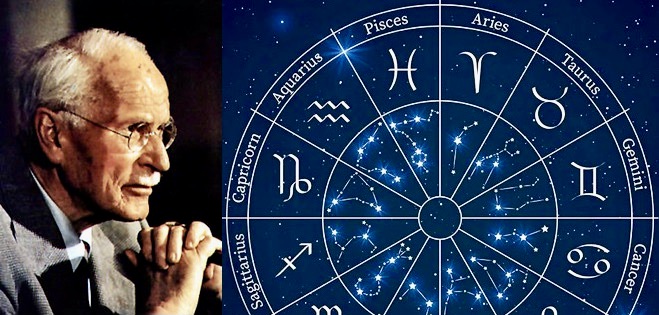
  • Archetypes in Astrology and Jungian Psychology


    A shared language of the psyche

    Explore how archetypes from Greek mythology connect astrology and Jungian psychology, revealing patterns of personality, growth, and self-awareness.

    One of the cornerstones of astrology is Greek mythology, which is fundamentally built on archetypes. These archetypes represent universal patterns of human behavior, motivation, and inner experience.

    Several years ago, I read a powerful book by Jean Shinoda Bolen1, Goddesses in Everywoman. The book deeply resonated with me — not only on a psychological level, but also through the lens of my astrological knowledge and how we understand personality through the natal chart.

    (more…)
  • My view on astrology – as a self-awareness tool for personal growth


    Astrology is not about predicting the future. It’s a tool for self-awareness, choice, and personal growth. Discover a grounded, responsible approach to astrology.

    A grounded perspective on astrology, choice, and personal responsibility

    Astrology is often misunderstood as something mystical or deterministic. For me, it is neither. I see astrology as a symbolic and energetic framework that helps us understand ourselves better — while always leaving responsibility, choice, and direction firmly in our own hands. Astrology will increase self awareness if you are approach it with common sense.

    A rational background and an esoteric interest

    If you are reading my blog, you will probably notice that I am quite esoteric. In my case, this doesn’t mean that I conduct my life based on how the stars are aligned. My core education is in law and finance — and if there is anything far from being esoteric, it is these two fields (except perhaps engineering and other hard sciences).

    (more…)
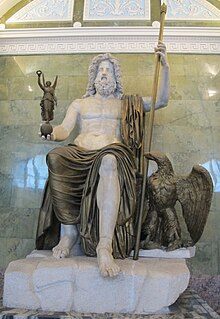
  • The Zeus (Jupiter) Archetype – Chief deity who holds strong power


    Chief deity in the Greek Pantheon between the 12 Olympian gods. God of the Sky, the Thunderer.

    Zeus — known as Jupiter in Roman mythology — is the supreme ruler of Greek mythology. From the heights of Mount Olympus, he governs both gods and humans, embodying authority, leadership, and power. While immensely influential, Zeus is not omnipotent; rather than constant direct intervention, he often exercises control from a distance, reinforcing hierarchy and order.

    Mythological Context

    Zeus is the youngest son of Cronus and Rhea. To prevent a prophecy that one of his children would overthrow him, Cronus swallowed each newborn — except Zeus, who was hidden by Rhea. Zeus later returned, led a successful rebellion against the Titans, and claimed dominion over the sky.

    His reign is marked by alliances, authority, and numerous relationships with goddesses and mortal women, producing many offspring. These unions strengthened his influence and extended his legacy throughout mythology — a key theme of the Zeus archetype.

    In astrology, Jupiter is one of the most significant planets in the natal chart. Visible to the naked eye, it was known and revered by ancient astronomers and astrologers. Jupiter symbolizes expansion, opportunity, faith, and growth.

    There is also an asteroid named Zeus (5731), discovered in 1988. When both a planet and an asteroid share the same archetypal name, astrologers distinguish their meaning:

    • Jupiter represents the higher, expansive, constructive expression of the archetype
    • Asteroid Zeus reflects the human, shadow, and ego-driven expression

    The asteroid is considered only when it is strongly placed or prominently activated in the chart.

    Jupiter (Zeus) in astrology

    Jupiter is the largest planet in the solar system. Being the largest planet we associate expansion, growth with it.

    Jupiter represents in the natal chart:

    • Lucky chance, business opportunities: we feel we are lucky in that area of life in which house our Jupiter is.
    • Wealth, security, expansion
    • Higher learning, influencing, philosophical believes 
    • Wisdom, seeing the big picture while not getting lost in the details
    • Faith in the future               

    Asteroid Zeus:

    • The seducer, the cheeky one – usually with a prominent Zeus the individual has a lot of lovers, maybe more marriages. It doesn’t mean that the person is a good lover. He enjoys more of the part of concurring the woman rather wooing her after he feels he reached his goal.
    • Arrogance – he can be strong headed and thinking that only his ways are working. He forces his will to his environment. Let it be within the family, at work or at his own business.
    • Rigid: he doesn’t want to change the status quo.
    • The person who is craving power and willing to get it. Even if he has to overstep other people to achieve his goal

    Zeus archetype in psychology

    • The king, the ruler: this archetype is a natural leader due to his ambitions and talent. He is inspired by the power above his own territory, let that territory be only a family, a business or a country.
    • Determined/ definite moves: he has very good view on the big picture but still the small details are not neglected by him. When he wants to get something he focuses on it and without missing a beat he gets it even at the cost of ruining other people
    • Master of alliances (both through business and through marriages): he is very much capable to work together with other powerful men. He is excelling at summits, agreeing alliances, and setting boundaries as well as negotiating alliances that is  beneficial for each party. He expects from the others to participate in the negotiations pursuing their own well understood interest and he acts exactly like that. For him marriage is more an alliance that helps him build his empire than an act of love.
    • The charmer / seducer: once he decides who he would like to get he will do everything to get close to the woman in question.
    • The “father” in the sky: he has strong desire to have kids as he sees them the continuation of his empire. He is a mentor type of father, but he expects that the children acts according to his will.

    How Zeus comes out in every day life in different life stages

    Childhood and Early Years

    A Zeus child reveals himself very early. He is strong-willed, decisive, and determined to assert control over his environment. This is the child who says “no” instinctively—not as rebellion, but as a declaration of autonomy. He wants to test limits, establish authority, and experience himself as the one who decides.

    From a young age, he begins to build his own miniature world in which he is the leader. Power dynamics matter to him, and he instinctively seeks situations where he can exercise influence. The most effective way to guide a Zeus child is not through force, but by offering structured choices—allowing him to feel in control while still operating within boundaries.

    Adolescence and Young Adulthood

    As a teenager, the Zeus archetype naturally gravitates toward leadership roles. He is often the captain of a sports team, the center of a social group, or surrounded by loyal followers who form his “court.” Popularity and hierarchy become important, and he tends to associate with those who reinforce his status.

    Romantic relationships are often approached as conquests rather than emotional connections. He seeks partners who enhance his image and position. During this stage, Zeus begins to understand hierarchy more consciously—accepting the world as it is, while simultaneously plotting how to secure his place at the top.

    Adulthood and Professional Life

    In the workplace, Zeus rarely sees himself as subordinate for long. He quickly believes he could perform better than those above him and instinctively analyzes systems, structures, and strategies. Leadership comes naturally to him, and he does not require instruction on how to take charge, work hard, or identify opportunities.

    He is emotionally detached in professional settings and expects the same from others, which can make him appear cold or authoritarian. He is not easily distracted by personal matters and views work as a means to build his empire—whether that is a business, a leadership position, or a legacy within an organization.

    Everything in his life becomes subordinate to this long-term goal. Marriage, when it occurs, is often approached as a strategic alliance rather than a romantic bond. It serves a purpose in supporting his ambitions rather than fulfilling emotional needs.

    Family and Fatherhood

    Zeus desires children as an extension of his legacy. He sees them as the continuation of what he has built. As a father, he often takes on a mentoring role rather than an emotionally nurturing one. He teaches through expectation, discipline, and example.

    However, he expects obedience and alignment with his values. The family system operates according to his rules, and emotional closeness may be limited. Children raised under a dominant Zeus father often experience structure, security, and guidance—but may also perceive emotional distance and rigidity.

©2025. All rights reserved.

Verified by MonsterInsights